Romwald
Always check the current rulebook before competing. Rules are reviewed periodically, and local clubs sometimes use house variations.
Pickleball is easy to start and surprisingly strategic once you know the rules. This guide covers pickleball rules for beginners: the court, serving, the two-bounce rule, scoring and the famous kitchen, all in plain English.
The Court at a Glance
- The court is 20 feet wide and 44 feet long, the same size as a doubles badminton court.
- The net is 36 inches high at the sidelines and 34 inches in the middle.
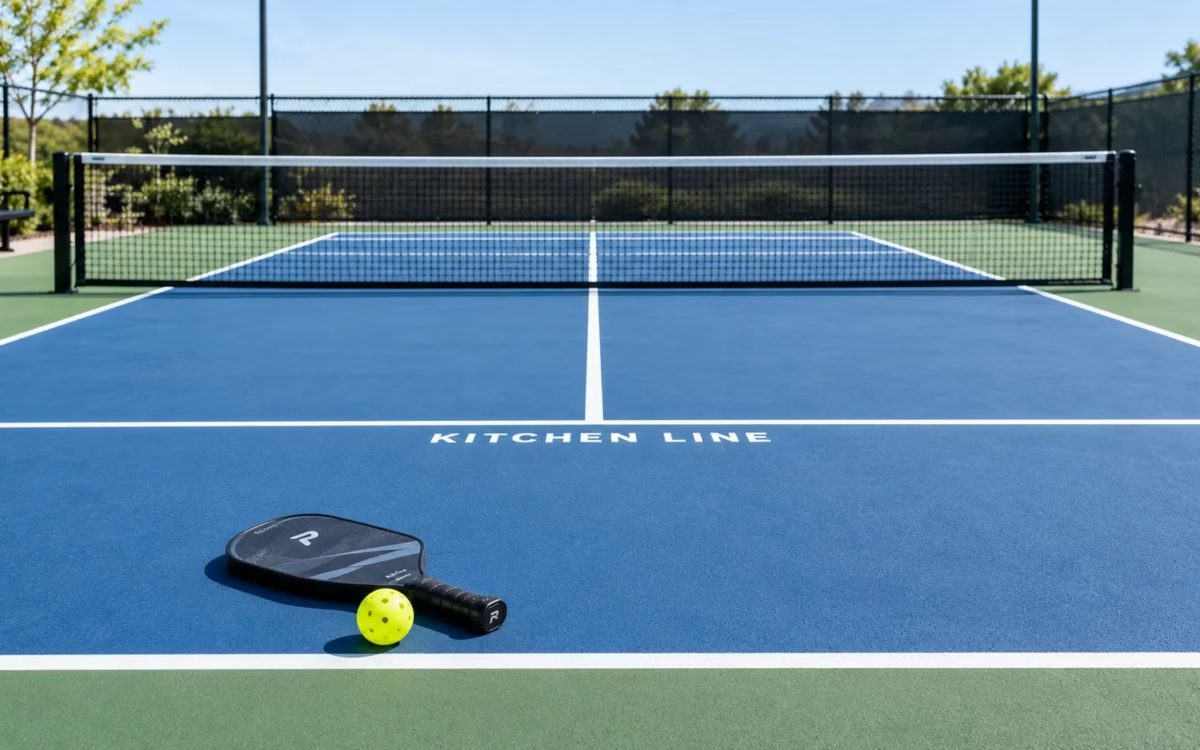
- The non-volley zone, nicknamed the kitchen, extends 7 feet from the net on each side.
For court and equipment specifications, see the summary of Section 2 of the 2025 USA Pickleball rules.
How to Serve
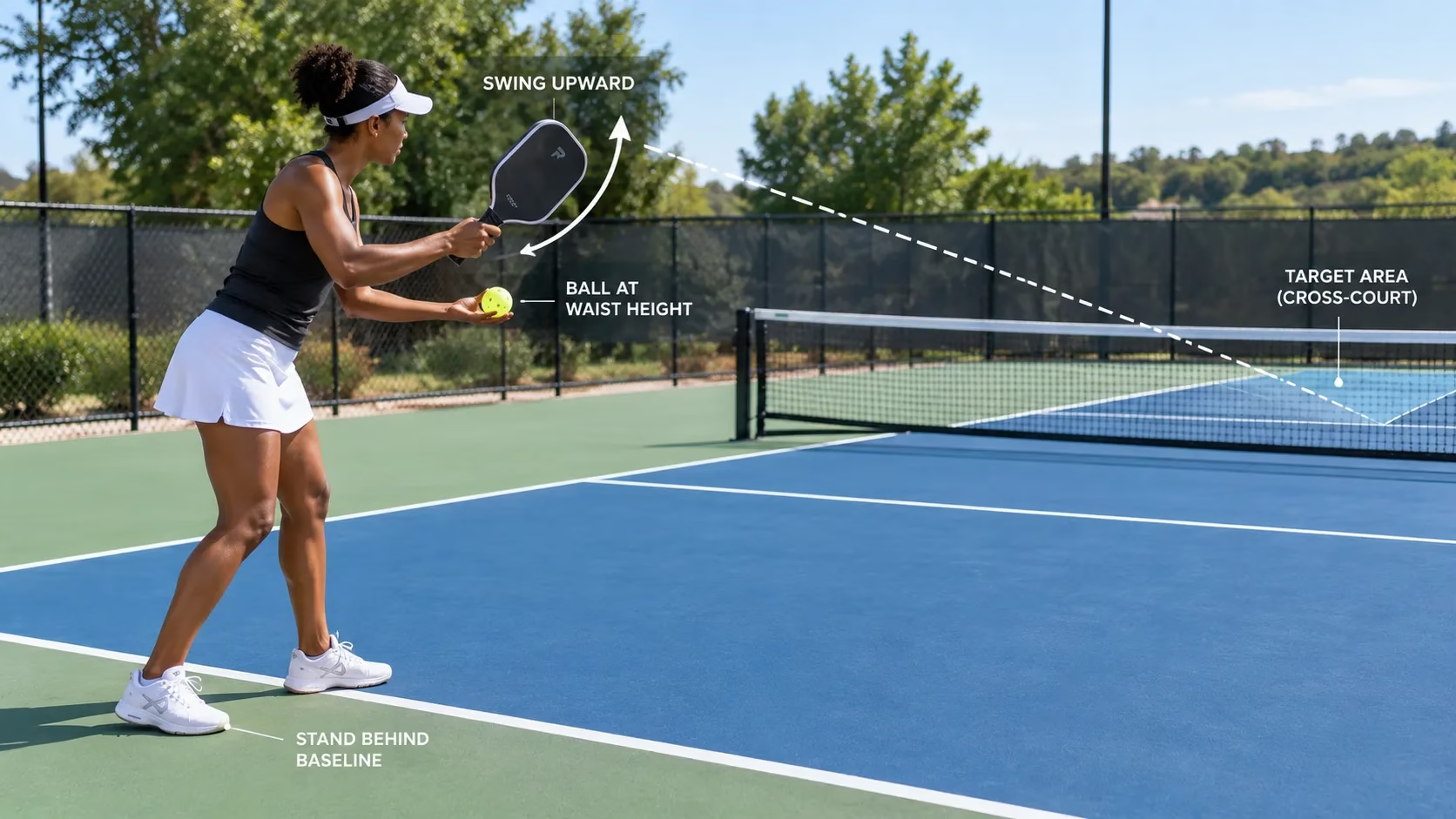
- Serve underhand with an upward swing, making contact below the waist.
- Serve diagonally cross-court into the opposite service area.
- The ball must clear the kitchen, and the kitchen line counts as part of the kitchen, so a serve that lands on it is a fault.
- You get one serve attempt per turn.
The Two-Bounce Rule
After the serve, the receiving team must let the ball bounce before returning it. Then the serving team must let that return bounce before hitting it. After those two bounces, either team may volley (hit the ball out of the air). The rule stops the serving team from rushing the net immediately.
The Kitchen Rule Explained
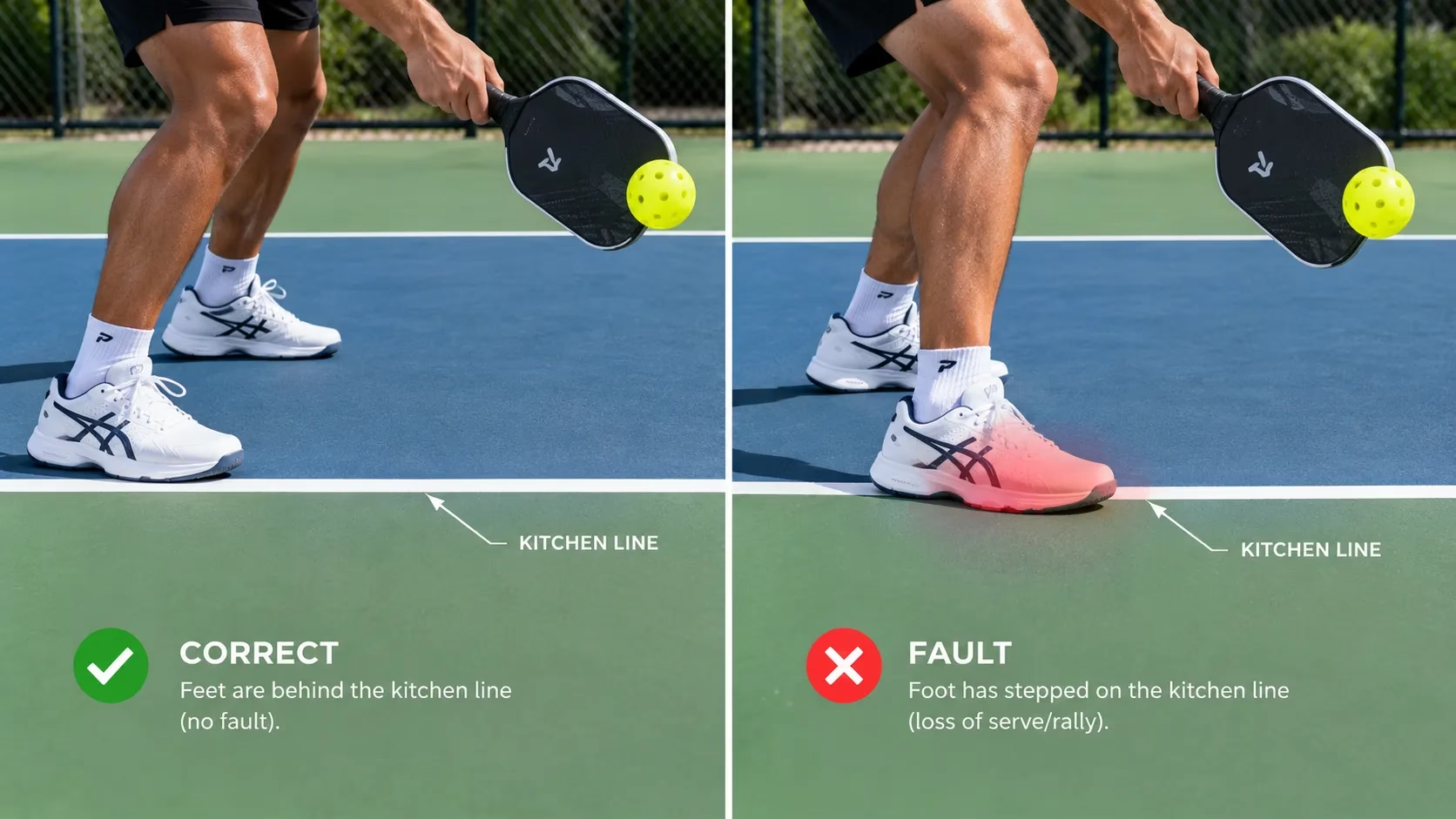
You cannot volley the ball while standing in the kitchen or touching the kitchen line. That includes your momentum carrying you into the zone after a volley. You may enter the kitchen at any time to hit a ball that has already bounced, but you must leave before volleying again. This rule rewards soft shots, called dinks, that keep opponents back and test patience.
Scoring
- In traditional scoring, only the serving team can score a point.
- Games are usually played to 11 points and must be won by 2.
- In doubles, the score is called as three numbers: your team’s score, the opponents’ score and the server number (1 or 2).
- When the serving team loses a rally, the serve passes to the next server, and after both partners have served, to the other team. At the start of each game, the first team gets only one server, which is why the opening score is called 0-0-2.
Some recreational groups and events use rally scoring or different game lengths, so ask before you play.
Common Faults
- Volleying while in the kitchen or touching its line.
- Hitting the ball out of bounds or into the net.
- Failing to let the serve and return bounce (the two-bounce rule).
- Serving into the wrong service area or into the kitchen.
A ball that lands on a line is in, except on the serve where the kitchen line is out.
Where to Read the Official Rules
The governing body publishes the full rulebook, terms and strategy resources at USA Pickleball. If you are playing in Canada or elsewhere, check your national organization too.
Get Your Gear Ready
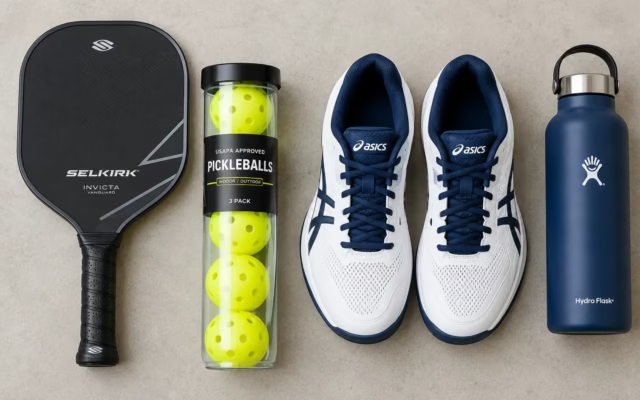
Once you know the rules, set yourself up properly. Our pickleball starter kit lists the essentials, and our guide on how to choose a pickleball paddle helps you pick one that suits your game.
FAQ
What is the kitchen in pickleball?
It is the non-volley zone, the 7-foot area on each side of the net where you cannot hit the ball out of the air.
Why do you only score on your own serve?
Traditional pickleball uses side-out scoring, so only the serving team can earn points. Some formats use rally scoring, where either team can score on every rally.
Can you serve overhand?
No. The serve must be underhand with the contact rules described in the current rulebook.
Related Reading
- How to Choose a Pickleball Paddle: Shape, Weight, Core and Face Explained
- Pickleball Starter Kit: Everything Beginners Need (and What to Skip)
- Pickleball Paddle Approved List: Is Your Paddle Legal?
- Pickleball Gear Trends to Watch This Season
Last updated: October 2026.